The Exile’s Advantage
Why critics of Reza Pahlavi’s "outsider" status miss the point: History shows that the most successful democratic transitions begin far from the dictator’s reach.

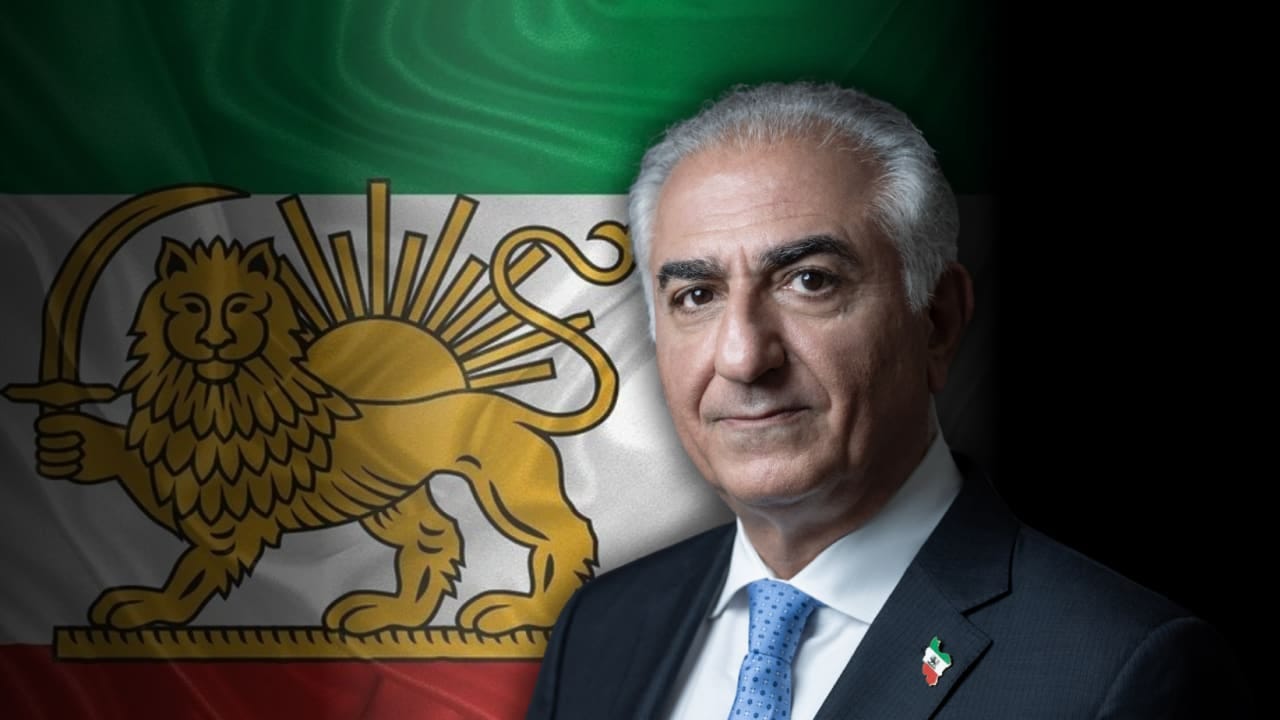
The history of liberty is rarely written solely within the borders of the oppressed nation. While dictatorships love to dismiss exiled leaders as “disconnected” or “relics of the past,” political history suggests something far more interesting: the exile is often the only person capable of preserving the institutional memory and international legitimacy required to rebuild a state from the ashes.
In the Iranian context, Reza Pahlavi is often discussed through the lens of 1979 nostalgia or monarchist debate. But if we look at him through the clinical lens of political science, he isn’t an outlier. He is a classic example of an “Anchor Figure” in exile—a role that has historically been the difference between a successful democratic transition and a descent into failed-state chaos.
1. The Historical Blueprint of the “Government-in-Waiting”
Opposition in exile isn’t just a group of people waiting for a regime to fall. It is a laboratory for the “Day After.” History is full of figures who kept a nation’s heart beating from afar, proving that distance from the capital does not mean distance from the struggle.
Charles de Gaulle (The Free French): In 1940, De Gaulle was a brigadier general with no army on French soil. From a radio station in London, he was dismissed by many as a pretender. Yet, his “Free French” movement provided a central authority that the fragmented internal Resistance could rally around. He ensured that when Paris was liberated, it didn’t fall into a vacuum of competing militias or Allied military rule, but back into the hands of a legitimate French Republic.
Corazon Aquino (The Philippines): Following the assassination of her husband in exile, Corazon Aquino became the symbolic center for a “People Power” movement that was too domestically suppressed to organize its own leadership. Her status as an external moral authority allowed her to return and provide a “safe” figure that even elements of the military could defect to, ending the Marcos era with a transition rather than a civil war.
The ANC (South Africa): While Nelson Mandela was the internal face of the struggle from his prison cell, the ANC’s leadership in exile—led by Oliver Tambo—performed the “shadow diplomacy” that turned the world against Apartheid. They didn’t just protest; they drafted the blueprints for a multiracial democracy years before the first vote was cast, ensuring the transition had a roadmap.
2. Why Reza Pahlavi is No Exception
As of 2026, Reza Pahlavi occupies a space similar to these figures. He has transitioned from being a claimant to a Facilitator. In a transition, you don’t just need a “revolutionary”; you need a “broker.” Here is why Pahlavi fits that historical mold for Iran’s specific challenges:
A. The “Golden Bridge” for the Military
No transition to democracy succeeds if the military remains loyal to the dictator out of fear of the gallows. For the Iranian Artesh (national military) and the professional bureaucracy, Pahlavi offers what Sun Tzu called a “Golden Bridge.”
Soldiers are more likely to defect to a figure who represents national stability rather than revolutionary revenge. Pahlavi has sharpened his rhetoric in early 2026, specifically calling for “national reconciliation” and the maintenance of public services. This provides the security apparatus with a legitimate “exit ramp” to join the people without fearing a 1979-style purge.
B. Preventing “Syrianization”
The Islamic Republic’s most effective propaganda is the threat of state collapse—the idea that without the “turban,” Iran will splinter into warring ethnic fiefdoms. Pahlavi, as a figure who represents the historical continuity of the Iranian state, acts as the “national glue.” He provides a platform where Kurds, Baluchs, and Azeris, can meet under a secular, unified framework. By being “above” the fray of partisan politics, he serves as a temporary custodian of the nation’s territorial integrity.
C. The Safe Space for Pluralism
Inside Iran, it is impossible to hold a “town hall” to discuss a new constitution without being arrested. The exile space is the only “neutral ground” where a coalition can be built. Pahlavi’s recent calls for a Constituent Assembly—where the people, not he, decide the future—mirrors the “Round Table” talks of the 1980s that allowed Eastern Europe to transition without total systemic collapse.
3. The Power of the “Known Quantity”
In the volatile climate of 2026, as the Islamic Republic faces a terminal crisis of legitimacy, the Iranian public—and the world—is looking for a “known quantity.” Transitions are terrifying because of the sheer magnitude of the unknown.
Pahlavi’s platform—secularism, human rights, and normalization of foreign relations—has been vetted and consistent for over four decades. This predictability is a vital de-risking tool. International partners are more likely to support a transition if they see a leader committed to “returning the nation to normalcy” rather than a new form of radicalism.
Like De Gaulle or Aquino, his role is to be the Temporary Guardian. His utility isn’t in “taking power,” but in holding the door open so that the Iranian people can finally walk through it to the ballot box.
4. The “No Exception” Rule of Exile Politics
Exile is often framed as a weakness, but in political science, it is a strategic advantage. It allows a leader to:
Escape the Purge: You cannot lead a transition if you are executed in the first wave of protests.
Build Global Coalitions: Pahlavi’s ability to engage with Western and regional leaders in 2025 and 2026 has laid the groundwork for the immediate recognition of a transitional government.
Maintain Moral Clarity: Being outside the regime’s system means his hands are not tied by the compromises required to survive within a theocratic bureaucracy.
History teaches us that the most durable democracies emerge when a figure of national significance agrees to steward the nation toward a vote, then steps aside for the will of the people. By serving as the bridge between Iran’s historical identity and its democratic future, Pahlavi provides the nation with its most viable “exit ramp” from a century of autocracy.